

In a previous blog, we announced that the representative became a member of Praxeme. Now it's time to start introducing Praxeme. In this article a general introduction to Praxeme is presented. This article is a summary of Introduction to Praxeme, the open method by Dominique VAUQUIER.
Purpose
The purpose of Praxeme is to face the growing complexity of enterprise environment.
In short, our projects are not going to get any simpler. We are surrounded by existing systems, weighed down by age, with which we have to coexist. What means do we have at our disposal to face this growing complexity and to keep control of our systems?
Initiative founded on the pooling of investments
Reference methods have been an answer to the question but now it is obsolete.
We are no longer in this situation: our reference methods have become obsolete, either because they did not know how to change and incorporate developments in technology and practices (object oriented approach, SOA…), or they fell victim to exogenous factors such as the acceleration of technological advancement and the loss of interest shown by management for these questions.
Praxme method was developed as an open method by joined forces of several enterprises and organizations with the principle of pooling the investment.
-
Initial writing of nine methodological guides by SAGEM (defense branch).
-
SMABTP financed the creation of procedures specific to the design and development of services.
-
Caisses d’allocations familiales (Office of Family Assistance) enabled the method to be based on a true metamodel.
-
French Army had accompanied the movement from the outset.
-
DGME (French General Directorate for State Modernization) had sanctioned it.
-
RATP has enabled the method to be adapted to physical systems.
Applications
Praxeme proposes a systemic approach that applies to both enterprises and organizations as well as information systems and technical systems. Indeed, all these systems comprise human, sociocultural and technical components, in variable proportions. They can all be considered as socio-technical systems and analyzed using the same framework. Among the known applications are:
-
In Belgium, the Walloon administration for its electronic administration projects;
-
SOA projects in different sectors of activity (energy, distribution, insurance);
-
Database integration on a multinational level (e.g., Celesio, pharmaceutical distribution);
-
Modeling of transport systems (research project for the RATP);
-
Applications in armament systems (in particular, upstream engineering with Thales);
-
Business architecture approaches (AXA Group)…
Adoption
It is internationally adopted;
-
it is taught at the Ecole Centrale de Paris.
-
The Ecole Polytechnique has signed the Enterprise Transformation Manifesto, a brief guide for the responsible enterprise.
-
The French government has adopted it as a reference method for its civil service modernization programs.
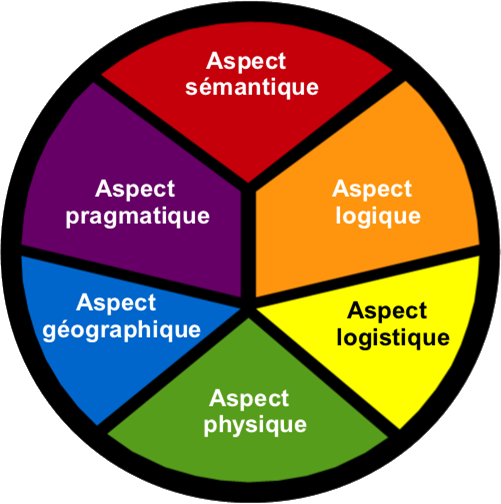
Covering all aspects of the enterprise
Its aim is to cover all aspects of the enterprise. Thus, it organizes the areas of expertise and processes, from strategy to deployment.
Thus, it organizes the areas of expertise and processes, from strategy to deployment. From a management point of view, this is indisputably its chief contribution: the ability to organize all contributions, to serialize all decisions and to create synergy between specialties. In so doing, it gives a concrete meaning to both enterprise and business architecture, positioning these disciplines in its framework of reference and equipping them with precise techniques

This work is licensed under a Creative Commons Attribution-ShareAlike 4.0 International License.